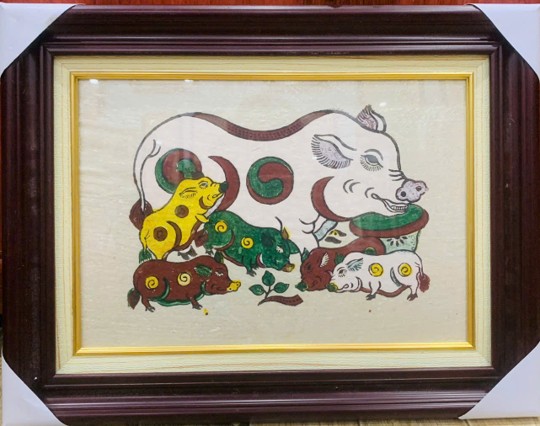
The Yin-Yang Pig Herd
Đàn lợn âm dương
Art Gallery
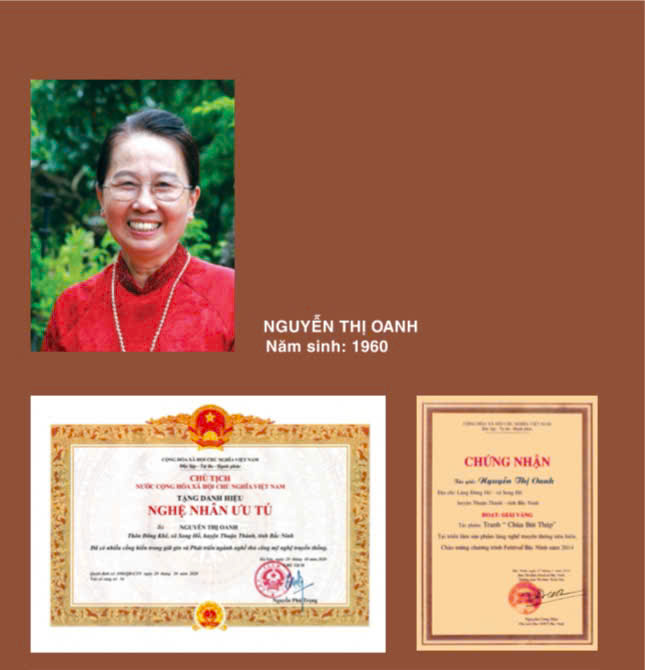
Nghệ nhân ưu tú Nguyễn Thị Oanh
Tổ dân phố Đông Khê, Phường Thuận Thành, Tỉnh Bắc Ninh
0966405957

Description
Artwork Title: Dan Lon Am Duong (The Yin-Yang Pig Herd)
Artistic Significance: It reflects the wishes for a wealthy, abundant life and a large, thriving family with many children and grandchildren. Furthermore, the ancient artisans embedded traditional Asian philosophy into the artwork: the spirals on the mother pig represent the Yin-Yang balance, while the five piglets symbolize the Five Elements (Nguy Hanh)
Introduction to Dong Ho Folk Painting
Dong Ho folk painting craft
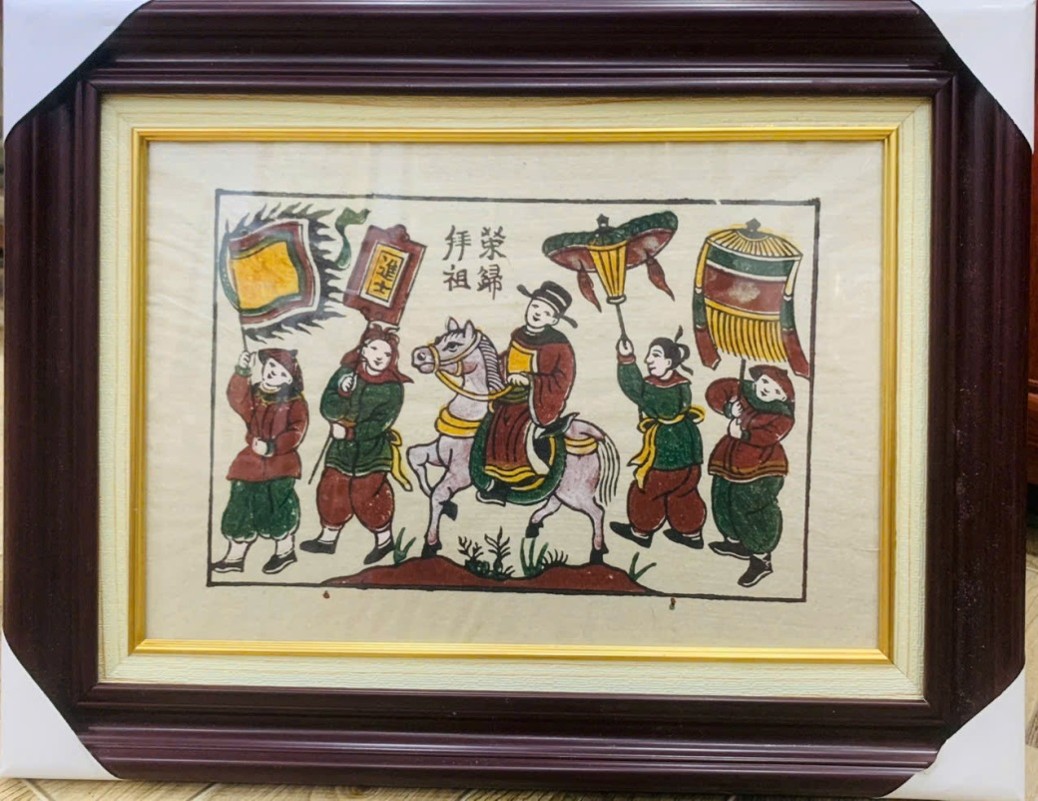
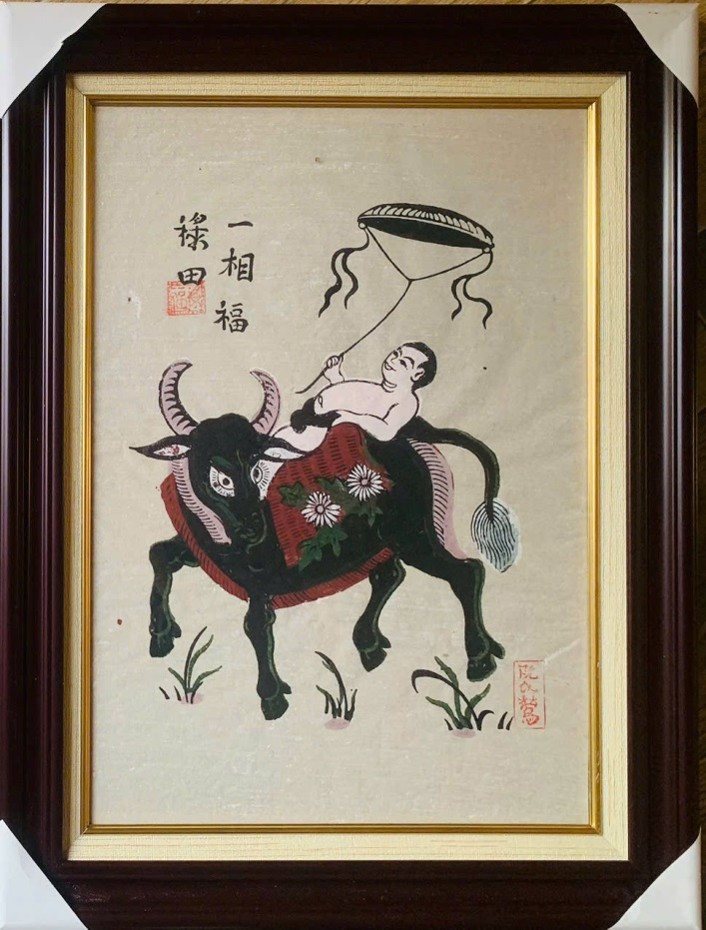
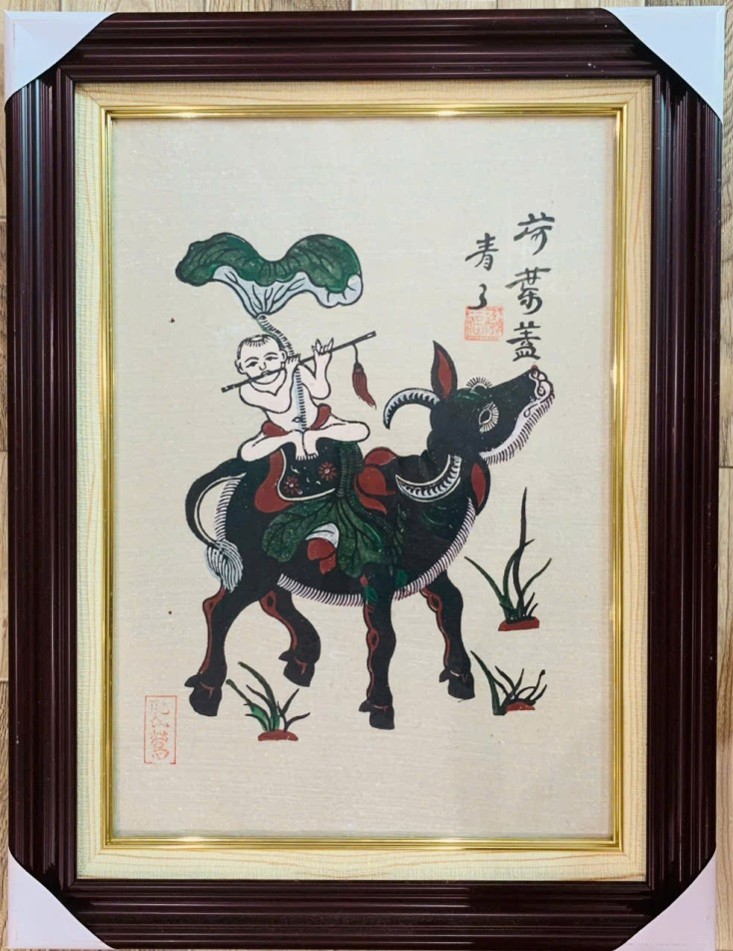
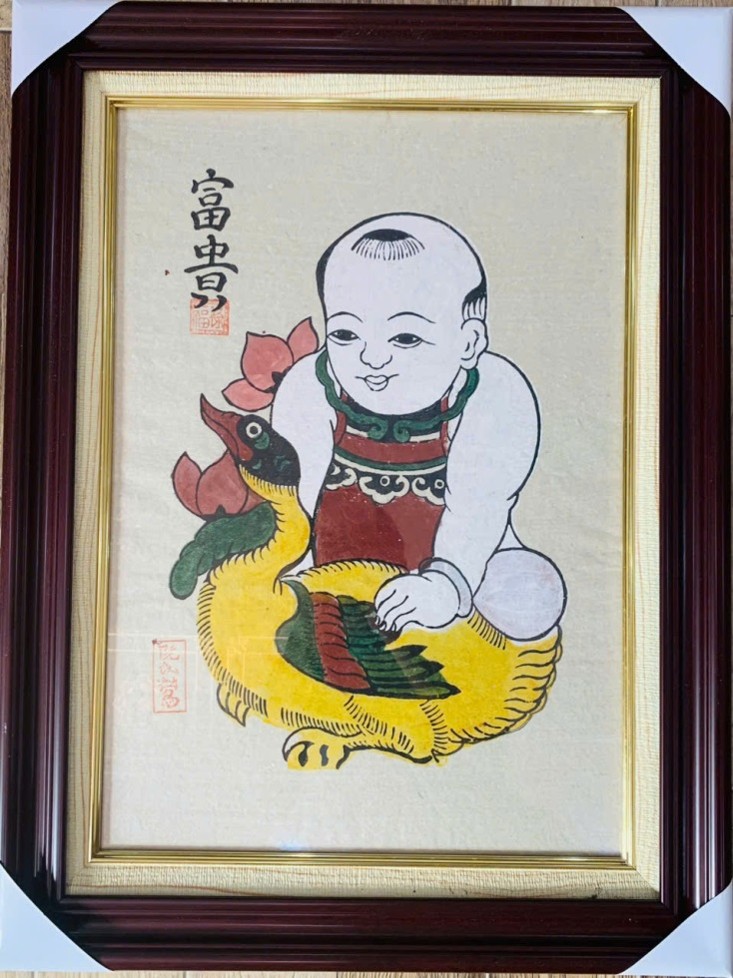
The craft of making Dong Ho folk paintings in Dong Khe neighborhood, Thuan Thanh ward, Bac Ninh province, originated approximately 500 years ago. The artisan community has created paintings with distinct characteristics in terms of themes, printing techniques, colors, and graphic designs using woodblock printing. The themes of the paintings typically include worship, good wishes, historical events, daily life, and landscapes, which are closely tied to the custom of hanging paintings during the Lunar New Year (Tet), the Mid-Autumn Festival, ancestor worship, and deity worship.
All stages—from sketching the designs and carving the woodblocks to mixing colors and printing—are entirely done by hand. The designs are drawn with a brush and Indian ink on traditional paper before being carved onto persimmon wood blocks. The colors are processed from natural materials: blue from indigo leaves, red from red ochre (sỏi son), yellow from pagoda tree flowers and gardenia pods, white from weathered scallop shells, and black from the ash of bamboo leaves and glutinous rice straw. The paintings are printed by pressing the blocks onto dó (poonah) paper that has been coated with a layer of scallop shell paste (hồ điệp), using five basic colors. The colors are applied following a specific rule: red is printed first, followed by blue, yellow, and white. The black outline block is printed last to complete the painting.
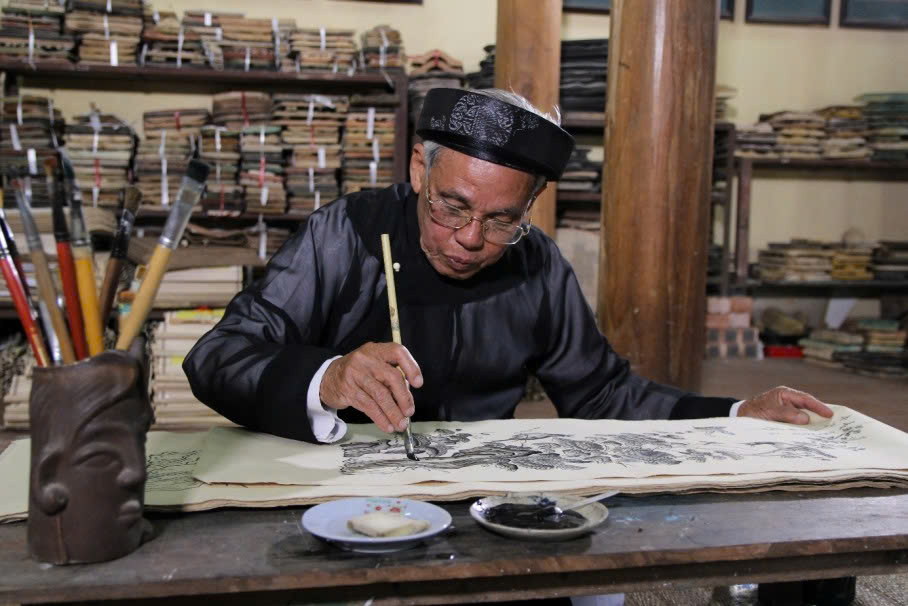
The craft of making Dong Ho folk paintings in Dong Khe neighborhood, Thuan Thanh ward, Bac Ninh province, originated approximately 500 years ago.
According to the Intergovernmental Committee of the 2003 Convention for the Safeguarding of the Intangible Cultural Heritage, the nomination dossier for Vietnam's intangible cultural heritage, "The craft of making Dong Ho folk paintings," satisfies the criteria for inscription on the List of Intangible Cultural Heritage in Need of Urgent Safeguarding, specifically:
1. Dong Ho folk paintings are closely associated with important festivals such as the Lunar New Year (Tet) and the Mid-Autumn Festival, as well as ancestor and deity worship rituals. Today, only a handful of families continue to maintain this craft, passing down knowledge and skills within the family and to apprentices through direct instruction and hands-on mentoring. Certain stages, such as sketching designs and carving woodblocks, require specialized training and years of accumulated experience. The woodblocks are considered family heirlooms, passed down through generations.
2. The number of skilled artisans has drastically declined (according to the nomination dossier, only a few households still maintain the craft) due to a lack of interest among the younger generation, the difficulty in ensuring livelihoods from the trade, and a declining demand for woodblock prints during traditional festivals. The number of highly skilled and dedicated practitioners is now too small to sustain the transmission and production of these paintings, hence the craft requires urgent safeguarding.
3. The safeguarding plan outlines seven objectives, including: opening transmission classes, inventorying the heritage, designing patterns, diversifying the market, improving access to raw materials, and providing protective equipment for artisans. The proposed activities are feasible, aligned with the objectives, and sustainable, while firmly placing the community at the center.
4. The dossier demonstrates the active participation of the community, particularly the practicing families, throughout the entire preparation process via inventorying activities and public events.
5. The heritage has been included in the Inventory of Intangible Cultural Heritage, which is regularly updated with the participation of the community.
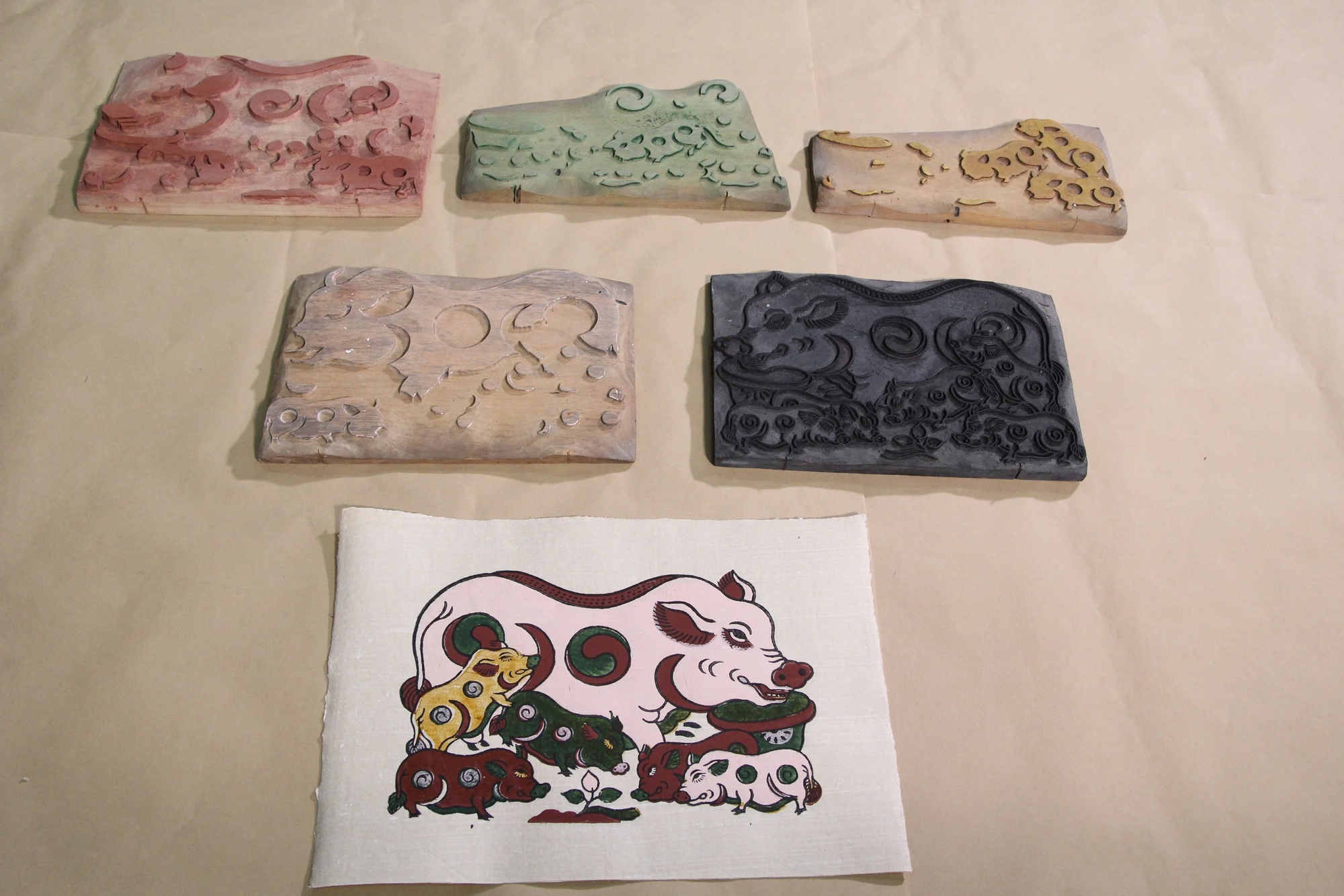
The craft of making Dong Ho folk paintings of Vietnam satisfies the criteria for inscription on the List of Intangible Cultural Heritage in Need of Urgent Safeguarding.
Accordingly, the Intergovernmental Committee of the 2003 Convention decided to inscribe "The craft of making Dong Ho folk paintings" on the List of Intangible Cultural Heritage in Need of Urgent Safeguarding, and encouraged Vietnam to consider integrating this heritage into the education system, both formal and non-formal, to encourage the younger generation to understand and appreciate the importance of safeguarding the heritage.
UNESCO's inscription of "The craft of making Dong Ho folk paintings" on the List of Intangible Cultural Heritage in Need of Urgent Safeguarding holds profound significance for the practicing community and the Vietnamese public. First and foremost, it affirms the unique historical and artistic values of the craft, while motivating artisans to continue preserving the traditional skills and know-how that are facing the risk of fading away.